
The practice of baptism began in the Old Testament. While its roots can be symbolically related to Noah and the Flood (being “saved” through water) it had a direct historical connection to the conversion of non-Jews. These proselytes were typically adults who converted to Judaism from various pagan religions. As new converts they were required to go through three symbolic rites – circumcision, sacrifice, and baptism.
The first step, if they were males, was to be circumcised. This has been the ritual introduction to Judaism for all male members of the Jewish community since Abraham. When male infants were circumcised, they were presented to the whole community in a public ceremony where the infant child’s foreskin was removed. Paul refers to his own circumcision where he was circumcised on the eighth day, the ritually perfect day for this unique ceremony. (See Philippians 3:4-6) Since having a public ritual to accomplish this with an adult male would be inappropriate, the priests needed to come up with a different community act that could take the place of the public circumcision of children. Their decision was to introduce a kind of ritual washing that had been common to the priests and spoken of in detail in the Law.
Exodus 19:10-14 is the story of Moses coming down off the mountain with the Ten Commandments. He was instructed by God to, “Go to the people and consecrate them today and tomorrow. Have them wash their clothes…” This washing was to symbolize the need for the worshippers to be clean before the presence of the Lord and the power of his Word. In addition, when the Aaronic priesthood was established Aaron, the High Priest, was brought into the doorway of the Tent of Meeting and he and his sons were washed with water. (See Exodus 40:12-15) Throughout the books of the Law there are numerous requirements for priests, people, and penitents to come before the Lord and wash themselves or their garments as a way of purifying themselves before the Lord. This became a well-known and well-used ritual for various activities of both priests and penitents.
The significance of this was not lost on the New Testament writers. The writer of Hebrews explains the meaning of the ritual washings of the priests as it relates to the N.T. period:
When everything had been arranged like this, the priests entered regularly into the outer room to carry on their ministry. But only the high priest entered the inner room, and that only once a year, and never without blood, which he offered for himself and for the sins the people had committed in ignorance. The Holy Spirit was showing by this that the way into the Most Holy Place had not yet been disclosed as long as the first tabernacle was still functioning. This is an illustration for the present time, indicating that the gifts and sacrifices being offered were not able to clear the conscience of the worshiper. They are only a matter of food and drink and various ceremonial washings—external regulations applying until the time of the new order.
Hebrews 9:6-10 (bold mine)
The Greek word for washings is βαπτισμός (baptismos) and it is the same word used throughout the New Testament for baptism. These washings required the priests to be immersed in water and to then be clothed in new garments. When John the Baptist was looking for a ritual to symbolize his call for a renewed faith in God, he choose the ritual washing of the proselytes, based on the ritual washings of the priests and High Priest, as a way of showing that faith in God required a true cleansing of the heart and soul. He adopted the ritual washing of the priests as a way of expressing that all Jews had to come and be cleansed before God so that they might “Produce fruit in keeping with repentance. And do not say to yourselves, ‘We have Abraham as our father.’ For I tell you that out of these stones God can raise up children for Abraham.” (John 3:8). In accordance with all righteousness John baptized Jesus in the wilderness by immersion, just like the proselytes, the priests, and the people who were already coming in response to the revivalistic message of John the Baptist. (See Matthew 3:6, 13-17)
The Symbolism of Baptism
Today, when a candidate is baptized, he or she is baptized as a result of their profession of faith in Christ. While some groups practice infant baptism, there is no biblical example of such an act. The baptisms of the New Testament and their counterparts in the Old Testament proselyte community were immersed. Following this tradition, many churches, including the Church of God, practice what is called believers baptism based on a profession of faith in Christ as Savior. This biblical and theological grounding also helps to explain the ritualistic meaning and symbolic actions taken when a person enters the baptismal waters.
A candidate enters baptism fully clothed, symbolizing that they come to this ritual from their previous life that was heaped in sin. Having professed Jesus Christ as their Savior, they enter into a new life promised by Jesus Christ (II Corinthians 5:17) and will enter that new life having been cleansed by the waters of baptism. Since the setting and clothing communicates that this is not something common, such as a swimming event or bathing experience, the witness of the candidate is initiated by simply entering the water. They may, if they so choose, share a testimony about their faith in Christ during the ordinance. This should be encouraged but not demanded. However, some kind of verbal confirmation is most appropriate, even if it is just the candidate answering questions in the affirmative. Following, are three examples of questions that might be used. Do you profess your faith in Jesus Christ? Have you accepted Jesus as your Lord and Savior? Have you renounced sin and accepted the gift of grace through faith in Jesus Christ? But even if they do not share a testimony or are asked to affirm statements, the very act of entering the water and being baptized is, in itself, a strong form of testimony.
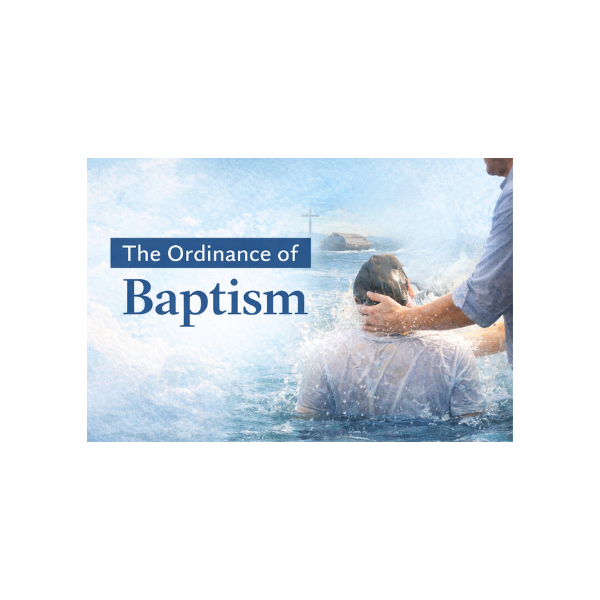
When the candidate is ready to be presented for baptism, the minister positions them between the pastor and the congregation and immerses them fully into the waters so that they are truly baptized (βαπτισμός; baptismos) from head to toe. This act has two symbolic meanings. First, it symbolizes the birth, life, death, and resurrection of Christ. By standing in the pool, going down into the water, and then being raised from it each candidate is reenacting the key elements of Jesus’ earthly ministry and testifying to the primary doctrine of the New Testament, the kerygma. This kerygma, the gospel preaching of the Apostles concerning Jesus Christ that he lived, died, and rose again, places the baptismal service in direct connection to the ministry of John the Baptist, Jesus, and the church experience in the Book of Acts. Second, they are giving witness to the spiritual act of redemption that has taken place in their own lives. They have died to the old sinful self and been raised to new life in Christ (see again II Corinthians 5:17). Therefore, two symbolic reenactments take place in the baptismal pool. The first recreates the life, death, and resurrection of Christ and the other testifies to the act of salvation wherein the candidate has died to sin and been made alive by the grace of God.
The Missional Nature of Baptism
Baptism not only symbolizes what has happened in the life of the believer, but it also foreshadows the new life into which the candidate now enters. All of the symbolic actions in the baptismal waters are testimonial/proclamational in nature. Baptism is a response to having been saved and it expresses the desire to let the world know that Jesus Christ is the Lord and Savior of the candidate’s life. Therefore, it is proper to say that baptisms are missional in both their focus and in their liturgical action.
As a missional act, it consecrates the candidate to the responsibility of being a witness for Jesus Christ in the world. It is designed to begin a movement from the sanctuary to the world so that they may now “go and make disciples of all nations, baptizing them in the name of the Father and of the Son and of the Holy Spirit, and teaching them to obey everything I have commanded you” (Mathew 28:19-20). To fulfill this calling it is highly recommended that all baptismal candidates invite their family, friends, and coworkers to the service as a way of testifying about their newfound faith in Christ. While the early church tradition was to designate Easter Sunday as the primary, and sometimes only day for baptisms, ministers should encourage their people to be baptized soon after their conversion. If only one person is ready for baptism, that is enough reason to announce and schedule a baptismal service. Since this kind of service encourages visitors to attend, baptisms can be a source of evangelistic outreach to families and communities, thus fulfilling the missional nature of the ordinance for the church as well for the candidate. Baptisms are, at their heart, missional; however, baptisms are also aligned with a liturgical purpose. The purpose of a baptismal service during a Sunday morning worship experience is to allow the congregation to realize that they must be about the task of discipling new converts. This liturgical reality should encourage the church to participate in the theological imperative included in the Great Commission. “Therefore, go and make disciples of all nations, baptizing them in the name of the Father and of the Son and of the Holy Spirit, and teaching them to obey everything I have commanded you” (Matthew 28:18-19).
Conclusions
To help accomplish the liturgical imperative of baptism, there are some practical issues that ministers should be aware of when planning a baptismal service. These may seem less theological in nature and more pragmatic in emphasis, but they all help accomplish the missional and liturgical teaching of the ritual.
- If your church has a baptismal pool, you are set and ready to go. If it does not, alternative methods will need to be found. Among them may be the following:
- Have another church with a baptistery host a baptismal service for both churches. Ministers can baptize their own candidates.
- Weather permitting, have the service at a backyard pool of someone in the church. It can be a great way of getting the church out into the neighborhood and making the service even more missional.
- Find a nearby lake or river that can accommodate the service. Combine it with a church picnic or cookout at a park.
- Some campgrounds provide perfect placement for this kind of service. If you contact them, you may find that they will be happy to host such an event and even invite those camping to attend.
- Construct a temporary pool such as an above-ground swimming pool.
Special attention should be given to what people wear. This is always a question that comes up surrounding a baptismal service. The following are some practical suggestions as to how to organize the baptismal part of the service. It requires several people to help get everything set up and to be there to help the candidates when they come out of the pool. Here are a few suggestions:
- If the church has robes for candidates to wear, this solves most issues.
- However, all candidates should be encouraged to wear dark clothing, no shorts or swimsuits, and footwear is optional. Remind them that they will be fully immersed and water makes clothes very heavy and clingy.
- The church should have towels prepared for each candidate to use, though it is advisable to have them bring their own, just in case.
- Each candidate should be made aware that they would need an entire change of clothes. Since they are being baptized by immersion, everything they wear will be completely soaked.
- Access to changing rooms and bathrooms for both men and women is a necessity.
- Have someone help the baptized candidate down from the pool. It can be slippery or awkward. They can have the person’s towel waiting for them.
- You may also want to let folks know that may not be able to do a full process of hair and makeup before returning to service. However, walking in during the service following baptism with wet hair is another badge of witness and honor.
In addition, you may want to use this document as a basis for a class that everyone interested in baptism must attend. Here are a few thoughts about such a class:
- The goal of the class is to make sure that each candidate is able to understand and articulate to others what happens and does not happen in baptism. While we’ve already noted that baptism does not save you, candidates should be made aware that following the Lord publically is an integral part of the ceremony. They should also be made aware that they are beginning their witnessing life for Christ and that this is a significant milestone in the Christian development.
- Some churches present the candidates with certificates later in the service, after the baptismal service has concluded and the candidates have returned to the sanctuary. Taking a picture for social media is a great way to express to the community that good things are taking place at your church and people are following the Lord by taking a public stand for Him. This reinforces the idea of evangelism as a key thrust of the service.
- Finally, a word to you as ministers. The same things about clothing apply to you as well. Be prepared not only to change clothes but also to have the worship service scheduled in such a way that you will have time to dry off, change, return, and fulfill your responsibilities in the service. Give yourself a little time to relax before preaching or leading in some way. After all, if you encourage candidates to invite family and friends, this will be an important sermon to share with potential new members of the congregation. Baptism is an important ordinance in the life of the church. Make it special. Make it memorable.