
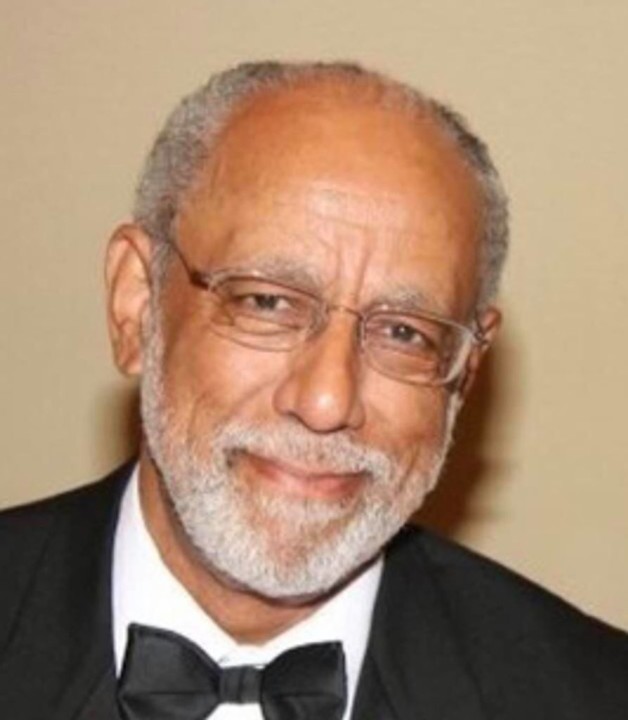
Paraphrasing a quote from Daniel Levinson, Edward C. Sellner “says that the basic mentoring relationship is simply friendship with someone a little more experienced, a person who acts as a guide in regard to a new career, profession, job or developmental stage”.1 My forty-year and counting relationship with the Rev. Dr. Sethard A. Beverly mirrors this description of the mentoring relationship. My relationship with Seth began to take shape around 1963 shortly after my graduation from Anderson College (now Anderson University). While we knew about one another prior to 1963, it was during my first year as a ministerial student at Anderson University’s School of Theology that Seth approached me about continuing my seminary studies in Kansas City and working with him as an associate minister at the Third Street Church of God where he served as pastor. It was relatively easy for me to hear Seth’s overture as the call of God. After all, I was in the early stages of developing a liking for a young lady in Sethard’s congregation to whom I have been married now for going on thirty-nine years (i.e. 1964 to 2002 as of this writing). As I reflect upon those early years I am grateful that Seth, functioning as a true mentor, took the initiative to seek me out and to make space for me to practice ministry while furthering my education at Central Baptist Theological Seminary. Not only did Seth seek me out, give me emotional and moral support in my pursuit of a formal education, he and his wife Sandra took me into their home where I lived for nearly a year – free of charge – until I married my wife and moved into a two-room seminary campus apartment. While living in the Beverly’s home, they treated me like a son. We became acquainted with one another’s interests, values, and goals, all of which are critical to the nurturance of the mentoring relationship. Relationships of trust were forged. There were times when Seth was my pastor, times when he was my father, and times when he was my older brother, but always a friend. I got the feeling early on that both he and Sandra were committed to doing whatever they could to help assure my success as a student and budding minister. I marveled at the professional and disciplined way in which Seth went about his work and ministry. I lived with him; I know the schedule he kept. He was up and ‘ready to roll’ early every morning. I remember him telling me one day, “Bob, treat your ministry as if it were your fulltime job and you were obligated to punch a clock. Don’t lie in bed until mid-morning, getting up when you want to – keep office hours, study, maintain a schedule, give your ministry a full day’s work.” And he did. It has been my aim across the years to model his instruction and example. My decision to go to Kansas City, serve on Seth’s staff, and attend seminary at Central Baptist is a decision that I have never regretted. The next three years were filled with challenge and many learning opportunities. Recognizing my need for an income greater than what the Third Street Church could afford, Seth was instrumental in securing a job for me at Cokesbury Bookstore in Kansas City, Missouri where I worked part-time until I graduated from Central. I have come to learn that this gesture of concern is also a part of the mentoring process. Mentee’s need support systems if they are to pursue their dreams and maximize their potential. In our society a source of income is critical and necessary system of support. Those three years of working under Seth’s tutelage have proven to be among the most informative years of my life. Admittedly, they were three years of working around the clock, studying, holding down a part-time job at Cokesbury, and carrying limited ministerial responsibilities at the church – not to mention adjusting to the fine art of marriage.
During those years Seth kept me encouraged while challenging me to grow in the disciplines necessary for effective pastoral ministry. Secure in himself and in his own call to ministry, Seth was not reluctant to share his life with me. He gave me space to venture and to fail. He gave me opportunities to preach, teach, and carry administrative responsibilities in the areas of Christian education and youth ministry. I looked forward to our conversations after preaching a sermon, or teaching a bible class during “mid-week prayer service”. His critique of my youthful efforts were always seasoned with compassion and deep insight. I remember one such conversation. It followed a sermon I preached during one of the mid-week services. I had done my homework in preparation for the sermon. I prayed over my homework and asked God to help me to preach in a way that would bless the hearers. I preached for about twenty-five minutes, trying hard to follow the basic directives of homiletical discourse, as I knew it at that time. When I finished and took my seat, those present were gracious. They said, “Amen, Praise the Lord” – all the shibboleths that affirm a minister in his preaching. I felt good about what I had done. Sethard took the floor and added his words of praise and commendation. I could hardly wait for our usual conversation following the worship service. After the benediction and the usual post-worship fellowship, Seth and I went to his study, at which point Seth fell out laughing. “Bob,” he questioned, “how long did it take you to learn all the information you gave us out there?” Immediately, I felt complimented by the question. Moreover, it was a question I could answer. “Seth,” I responded, “I just completed a semester of classes focusing upon the subject matter I dealt with this evening.” Seth’s second question was not as ingratiating as the first, but it taught me a lesson I have never forgotten. “Bob,” Seth questioned, “if it took you a whole semester to learn it, how did you expect the folks who were here this evening to understand all that in twenty minutes?” Seth went on to say, “Bob, I counted five people out there who didn’t get any further in school than the fifth grade.” We both ended up laughing, but I got the message loud and clear. A sermon is most helpful when it makes the profound simple, easy to understand, and relevant to the everyday life of those who hear it. Know your audience, seek to understand their needs and spiritual hungers, and feed the saints in bits that they can chew and digest. Thanks to Seth’s skillful mentoring and modeling in his own preaching and teaching ministry, it has been my aim across the years to do extensive homework, but boil it down. Organize the sermon in easy to understand sound bits, illustrate its points, and serve it up with compassion and concern for the hearers. Seth also helped me to understand that getting to know the saints, their needs and spiritual hungers is rarely learned in the classroom. The classroom is for learning theory; application is learned in the streets, in the jails, in the nursing homes, in the hospitals and health care facilities, and in homes where people live and celebrate and sometimes fight in the name of negotiating relationships. In these matters Seth was a mentor parexcellence. He took me with him to visit members in the hospital, to visit nursing homes, the sick and shut-in. There were times when we went to the city jail and Seth had me to preach to the inmates, and to share my testimony. Seth was very adept at facilitating “on the job training”. I remember one mid-night being awakened from sleep by a phone call from Seth. “Bob, get dressed. I want you to go with me to help quail a domestic dispute.” The wife of an abusive husband had called Seth for help. Seth picked me up. While we road to the couple’s house, Seth shared with me about the couple’s stormy marriage. He also shared with me what he perceived to be his role once we got to the couple’s house. As he drove he began to pray aloud that God would give insight, guidance, and protection to all concerned. I was impressed and scared. But this nocturnal trip gave me an opportunity to experience at close range the broad, if not extreme, dimensions involved in being a pastor.
As I now reflect upon that late night vigil of crisis intervention, I am reminded of the extent to which good mentors will go to afford their mentees learning opportunities. This was something Seth did not have to do. He could have invoked many reasons to leave me out of that night’s experience. But like a good and faithful mentor Seth was alert to maximize every opportunity to expose me to new experiences, which experience could never be duplicated in the classroom. This and countless other experiences alerted me to one of Seth’s unique mentoring abilities, namely, the capacity to learn and grow with one’s mentee. He communicated in very creative ways that he was a learner and seeker with me in this challenging, and oftentimes difficult, adventure called pastoral ministry. Seth conveyed, without verbalizing it, that he too was on a learning curve. Albeit, he was always a curve ahead of me, it was encouraging to know that we were friends learning together how better to serve the Lord and His people. For example, I remember wanting to initiate a new thrust in the church’s Christian education program. The proposed program would in some ways affect the Sunday school department. Brother D_____. was Sunday school superintendent, a likeable and elderly gentleman, but not always easy to work with. In some ways he was stubborn and set in his traditions. I shared my idea with Seth. He asked me to put the idea in writing, outlining the purpose, plan of action, and hoped for outcomes. I did so, doting every “i,” and crossing every “t” I knew to dot and cross. I submitted my proposal to Seth and awaited his response. After a day or two Seth called me into his office to discuss my proposal. “Bob, this is good,” he said, “but tell me – in the implementation of it, do you want to fight Brother D_____, or do you want to implement your program?” My response was quick and to the point, “I want to implement the program!” “Good,” said Seth. Then he added humbly expressing his desire to learn with me, “Bob, I’m not sure that I know how to work with Brother D_____, but let’s put our heads together and figure out a way to implement this program without fighting Brother D_____.” Seth guided me in spending the next ‘little-while’ going through different role-play situations to implement my idea. After considering the advantages and disadvantages of several approaches we landed on the one that seemed the most appropriate. I implemented the program and it garnered Brother’s D’s support. This was a learning experience that has been of tremendous benefit to me across the years. I have been a pastor now for going on thirty-one years. During these years I have had ample opportunity to distinguish between implementing programs in ways that win people’s support, and implementing programs in ways that conflict with people’s felt needs and limited vision. While I think Seth was also learning how to do this, it was certainly an “eye-opener” for me. More than perhaps any other, Seth has helped me to realize that many of the relational conflicts we encounter in the church are usually due to the way we go about doing things, and rarely because people are mean and cantankerous. The relationship forged during those three years of intensive mentoring, has continued to this day. I still seek Seth’s counsel and wisdom. It is second nature for either of us to pick up the telephone and share and critique each other’s thoughts and ideas. His enthusiasm about new and relevant directions for ministry and personal growth is contagious. As a result, when he has embarked upon new ventures and shared the news with me, I have often followed suit. The benefits have been rewarding. The years have come and gone, and I am now nearly twice as old as Seth was when he risked taking me on as a mentee. Surely, he must have had some fears about taking such a plunge. But if he had any fears I never knew it. He managed his fears well, which is a necessary criterion for those who would mentor others. While I do not know if Seth had any formal training in the art and science of mentoring, I can only imagine the stream of questions that must have flooded his mind as he pondered the thought of mentoring me. Will Bob and I be a good match? Will our personal styles clash? Will we be able to work together? How will we handle our differences? How will Bob manage honest and well-intentioned criticism? Will the spirit of competition emerge and foil our good intentions? Will I be able to walk that fine line between helping and hurting? Am I competent enough to mentor someone else? How do I embrace what works for me, without making it appear that it will work for Bob? What happens if this venture meets with complete failure? Whatever questions and fears Seth may have had, I was never aware of their impact upon our relationship. He either hid them well, or managed them productively. In either case, I’m a better person for Seth’s having taken the time and the risk to mentor me. As I ponder Seth’s contribution to my life and ministry, I am reminded of a line from Dag Hammarskjold’s Markings where he references “The humility which comes from others having faith in you”.2 Indeed, I am both humbled by and grateful for the investment Seth risked mentoring me. “It is not what we give but what we share, For the gift without the giver is bare.”3 A line from Ralph Waldo Emerson also comes to mind: “The only gift is a portion of thyself”.4 Kahlil Gibran would add: “You give but little when you give of your possessions. It is when you give of yourself that you truly give”.5 Thanks Seth for both the gift and for the sharing of yourself. May God grant me the courage to be as generous toward the young men and women along my path, as you have been toward me.
Posted in the loving memory of Jobert O. Dulin Jr by permission of his family.